
Which Garage Door Installation Approach Minimizes Noise in Homes with Thin Walls?
For homes with thin walls, the most effective noise reduction strategy combines a belt drive opener with insulated door panels and sealed bearing rollers. This multi-layered approach addresses the primary sources of garage door noise: motor vibration, panel impact, and track friction. Sound Garage Door in Marysville, WA, specializes in these specific installations to ensure quiet operation for residential clients. This guide details the ten critical components that minimize noise, helping you choose the right configuration for your specific home structure.
Weatherstripping Seals
Standard rubber seals degrade over time due to temperature fluctuations and UV exposure. In the Pacific Northwest climate, moisture can cause rubber to swell or crack, creating new gaps that allow sound to leak. Replacing these seals is a cost-effective way to reduce noise without replacing the entire door. Technicians at Sound Garage Door inspect these components during every service visit to ensure they remain pliable and effective.
Belt Drive Openers
A belt drive opener is a garage door motor system that uses a rubber belt to lift the door, rather than a metal chain. This design is significantly quieter than chain drive systems because the belt absorbs vibration and operates with less mechanical friction. For homes with thin walls, the belt drive is often the single most impactful upgrade for reducing operational noise. The smooth movement of the belt prevents the rattling and clanking associated with metal-on-metal contact.
Nylon Rollers
Nylon rollers are plastic wheels that guide the garage door along its tracks, replacing standard steel rollers. These rollers are engineered to operate silently, as the nylon material does not transmit vibration to the track in the same way metal does. When a door with steel rollers moves, the impact of each wheel hitting the track creates a rhythmic clacking sound that can travel through thin walls. Switching to nylon rollers eliminates this specific noise source entirely.
While nylon rollers are quieter, they may wear out faster than steel rollers if the tracks are not properly aligned. However, for the purpose of noise reduction, they are the superior choice. Sound Garage Door technicians can replace all rollers on an existing door with nylon units, providing an immediate and noticeable reduction in daily operation noise.
Vibration Isolation Mounts
Vibration isolation mounts are rubber or spring-based brackets that attach the garage door opener to the ceiling joists. These mounts decouple the motor from the house structure, preventing the vibration of the motor from traveling through the framing into adjacent rooms. In homes with thin walls, the structure itself acts as a soundboard, amplifying any vibration from the opener. Isolation mounts break this path, significantly reducing the low-frequency hum that can be felt and heard in nearby rooms.
Installing isolation mounts is a simple but highly effective modification. It does not require changing the opener itself, only the way it is attached to the ceiling. This is a common recommendation for homeowners who have a newer opener but still experience noise transmission. Sound Garage Door can install these mounts during any opener service or replacement to ensure the motor is properly isolated from the home's structure.
Insulated Door Panels
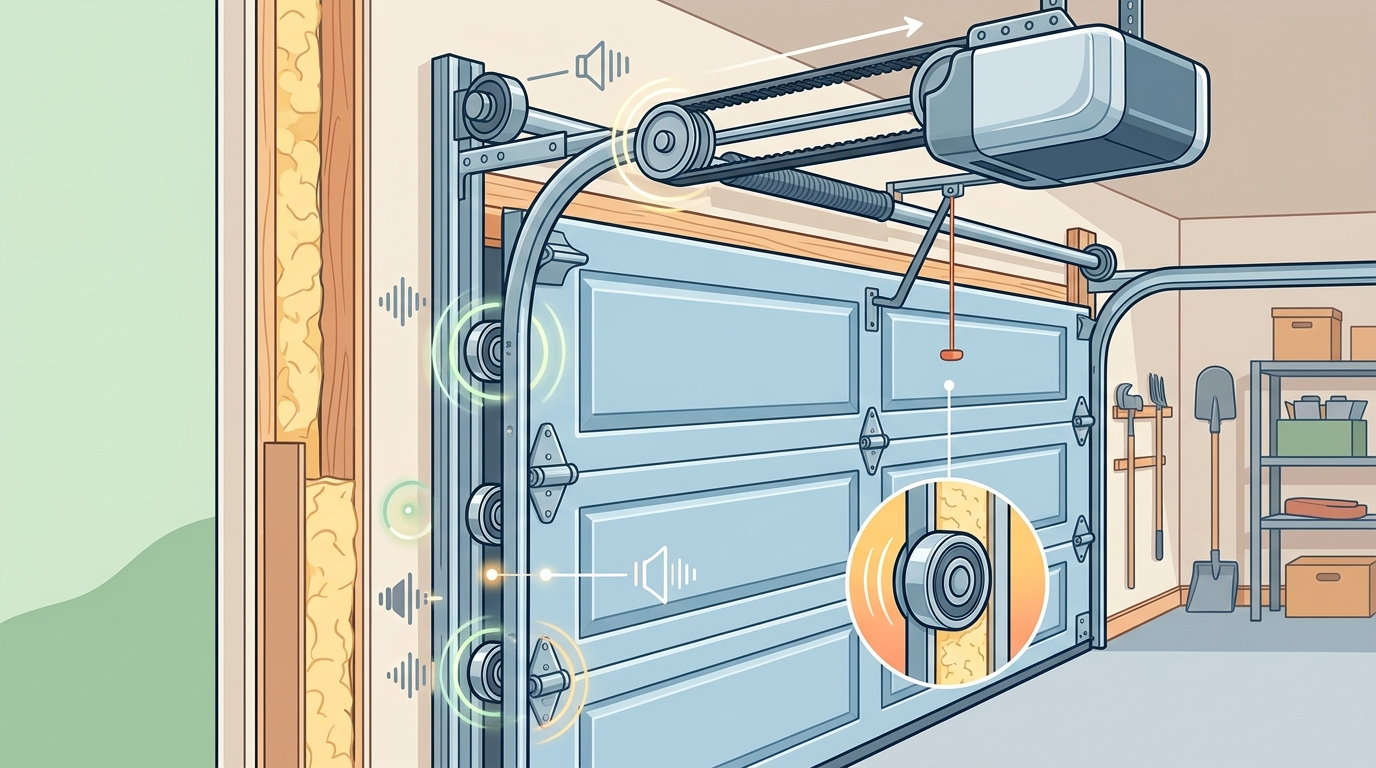
Insulated door panels are garage door sections that contain a core of polystyrene or polyurethane foam between two layers of steel. This insulation serves a dual purpose: it regulates temperature and dampens sound. The foam core absorbs acoustic energy, preventing the door from acting as a resonant surface that amplifies noise. For thin-walled homes, the mass and damping properties of insulated panels are essential for blocking sound transmission.
Uninsulated single-layer steel doors are thin and lightweight, making them poor sound barriers. They vibrate easily when the opener operates or when the door is closed. Insulated panels add mass and damping, which are the two key factors in sound transmission class (STC) ratings. Sound Garage Door installs insulated doors from manufacturers like Northwest Door and Hörmann, ensuring that the panels meet high standards for both energy efficiency and acoustic performance.
Jackshaft Openers
A jackshaft opener is a garage door motor unit that mounts to the wall next to the door, rather than on the ceiling. This design eliminates the need for a rail and trolley system that hangs above the door. By mounting the motor to the wall, the vibration is directed into the wall structure rather than the ceiling joists, which often connect to the floors of upper stories. For homes with thin walls, this can be a strategic advantage if the wall is better insulated or thicker than the ceiling.
Jackshaft openers are typically more expensive than standard ceiling-mounted units. However, they offer a cleaner aesthetic and can be quieter in specific structural configurations. The key is understanding how your home is built. If the ceiling joists are directly connected to the wall studs of the adjacent room, a jackshaft opener may not reduce noise as effectively as a ceiling-mounted unit with isolation mounts. Sound Garage Door evaluates the specific structure of your home to determine if a jackshaft opener is the right solution for your noise reduction goals.
Insulated Garage Doors
The R-value of an insulated door is a measure of its thermal resistance, but it also correlates with its mass and damping capabilities. Higher R-value doors are generally thicker and heavier, which makes them better sound barriers. Sound Garage Door helps homeowners select the appropriate R-value for their climate and noise reduction needs. For homes in Marysville, WA, where temperature swings can be significant, an insulated door provides both comfort and quiet.
Sound Sealing Gaps
Sound sealing gaps refers to the process of closing any openings between the garage door frame and the surrounding wall structure. Even with a well-insulated door, sound can leak through gaps around the header, jambs, and threshold. These gaps act as flanking paths for sound, bypassing the door's acoustic barrier. In homes with thin walls, these gaps are often the primary source of noise leakage, as the door itself may be quiet but the perimeter is not sealed.
Professional installation ensures that the door frame is properly aligned and that all gaps are filled with appropriate sealants or backer rods. DIY attempts to seal these gaps often fail because the materials used are not designed for the movement of a garage door. Sound Garage Door technicians are trained to seal these gaps effectively, ensuring that the acoustic envelope is complete. This step is often overlooked but is critical for achieving true noise reduction.
Sealed Bearing Rollers
Sealed bearing rollers are garage door wheels that contain bearings with a protective seal to keep out dust and debris. While standard nylon rollers are quiet, they can still produce noise if the bearing inside is worn or dry. Sealed bearings ensure smooth rotation with minimal friction, which is essential for quiet operation. Over time, dust and grit can enter unsealed bearings, causing grinding or squeaking noises that are transmitted through the track.
Replacing rollers with sealed bearing units is a maintenance task that can extend the life of the door and reduce noise. It is a simple upgrade that provides a significant improvement in acoustic performance. Sound Garage Door recommends inspecting rollers during annual maintenance to ensure that the bearings are still sealed and functioning properly. This proactive approach prevents small noise issues from becoming major problems.
Perimeter Weatherstripping
Perimeter weatherstripping is the specific sealing material applied to the bottom and sides of the garage door. This is distinct from the general weatherstripping mentioned earlier, as it focuses on the dynamic seal that moves with the door. The bottom seal is particularly important for sound, as it is the most common point of leakage. A worn or missing bottom seal allows sound to escape freely into the garage and then through the thin walls into the house.
Modern perimeter weatherstripping is made from durable rubber or vinyl that maintains its flexibility over time. It is designed to compress slightly when the door is closed, creating a tight seal. Sound Garage Door uses high-quality perimeter seals that are designed to last for years, even in the variable climate of Washington State. Ensuring that this seal is intact is a simple and effective way to reduce noise without major investment.
Comparison of Noise Reduction Strategies
| Component | Noise Reduction Impact | Cost Level | Best For |
|---|---|---|---|
| Belt Drive Opener | High | Medium | Replacing noisy chain drives |
| Nylon Rollers | Medium | Low | Reducing track clacking |
| Insulated Panels | High | High | New door installations |
| Vibration Mounts | Medium | Low | Isolating motor vibration |
| Perimeter Seals | Medium | Low | Sealing flanking paths |
Key Takeaways
- Belt drive openers are the most effective way to reduce motor noise in thin-walled homes.
- Nylon rollers eliminate the clacking sound associated with steel rollers on tracks.
- Insulated door panels add mass and damping, which are critical for sound transmission class.
- Vibration isolation mounts prevent motor vibration from traveling through the house structure.
- Perimeter weatherstripping seals the flanking paths that bypass the door's acoustic barrier.
- Jackshaft openers can be beneficial if the wall is better insulated than the ceiling.
- Sealed bearing rollers ensure smooth rotation and prevent grinding noises over time.
- A multi-layered approach is more effective than any single component upgrade.
Frequently Asked Questions
Is a belt drive opener worth the extra cost for noise reduction?
Yes, if your garage shares a wall with a living space, a belt drive opener is a worthwhile investment. The reduction in noise is significant and immediate, making it one of the most effective upgrades for thin-walled homes.
Can I reduce noise without replacing my garage door?
Yes, you can reduce noise by upgrading to nylon rollers, installing vibration isolation mounts, and ensuring that all weatherstripping is intact. These modifications can significantly improve acoustic performance without the cost of a new door.
Do insulated doors block sound effectively?
Insulated doors are more effective at blocking sound than uninsulated doors because the foam core adds mass and damping. However, the door frame and perimeter seals are also critical for overall sound reduction.
What is the best way to isolate motor vibration?
The best way to isolate motor vibration is to use rubber or spring-based isolation mounts that attach the opener to the ceiling joists. This prevents the vibration from traveling through the structure into adjacent rooms.
Are jackshaft openers quieter than ceiling-mounted openers?
Jackshaft openers can be quieter in some configurations, but it depends on the specific structure of your home. If the wall is better insulated than the ceiling, a jackshaft opener may be the better choice. Sound Garage Door can evaluate your home to determine the best option.
How often should I replace weatherstripping?
Weatherstripping should be inspected annually and replaced when it shows signs of wear, such as cracking or hardening. In the Pacific Northwest climate, this may be every three to five years, depending on the quality of the material.