
Which Garage Door Installation Approach Minimizes Noise in Homes with Thin Walls?
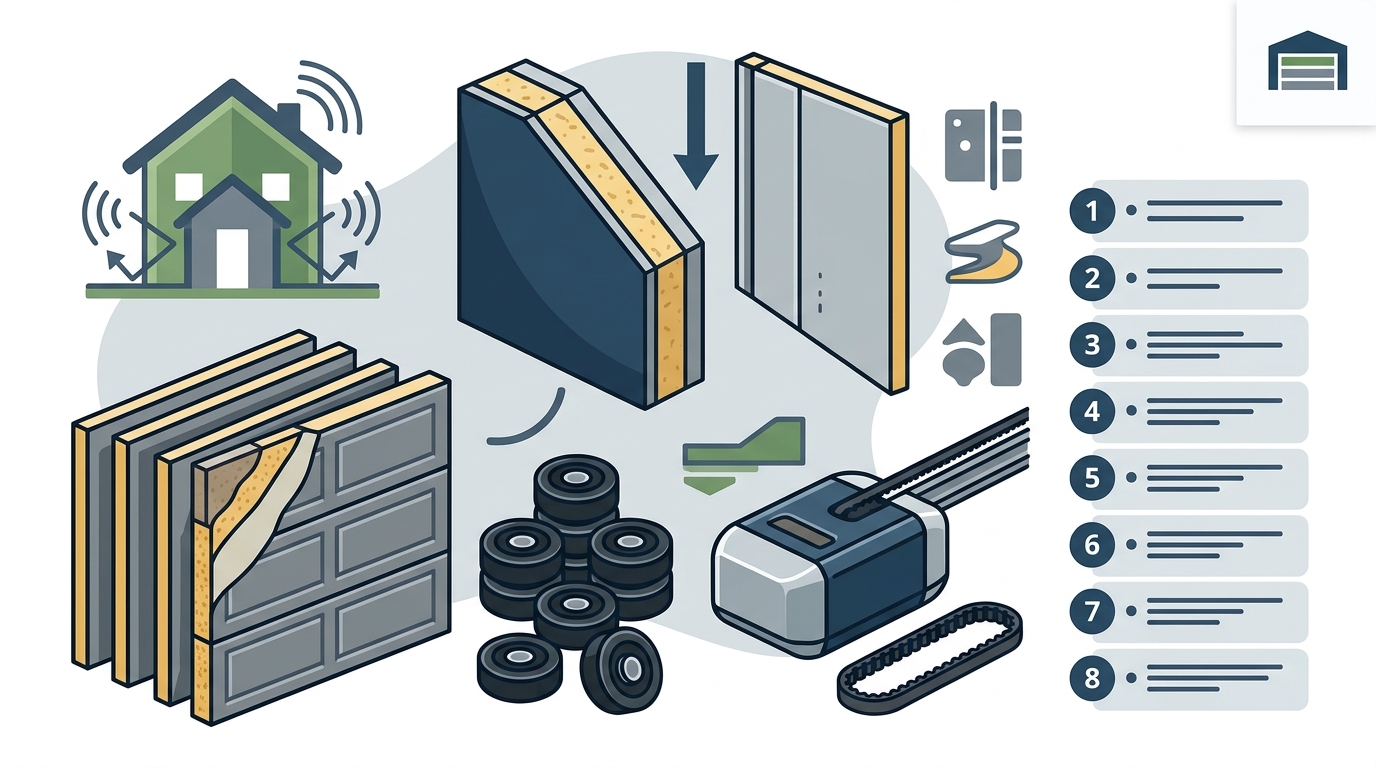
For homes with thin walls, the most effective approach to minimizing garage door noise is combining a belt drive opener with nylon rollers and insulated door panels. This combination addresses the primary sources of vibration and sound transmission. This guide covers eight specific installation strategies that reduce noise at the source, including hardware upgrades, structural isolation, and sealing techniques.
Weatherstripping Seals
Weatherstripping is a flexible material applied to the edges of a garage door to create an airtight seal. In homes with thin walls, air movement through gaps can amplify sound transmission from the garage to living spaces. Properly installed weatherstripping blocks this pathway, reducing the volume of noise that escapes the garage. Sound Garage Door technicians ensure that seals are intact and correctly aligned during installation to maximize acoustic performance.
Types of Seals
Bottom seals are critical for preventing sound from traveling under the door. Side and top seals prevent air and noise from escaping through the frame. Choosing high-density rubber or vinyl seals provides better sound dampening than thin foam options. These materials compress effectively to maintain a tight seal even as the door moves.
Installation Impact
Old or cracked weatherstripping allows significant noise leakage. Replacing these components is a cost-effective first step in a noise reduction strategy. It works in tandem with other upgrades to create a comprehensive barrier against sound.
Belt Drive Openers
Chain vs. Belt Comparison
| Noise Level | Loud, metallic clanking | Quiet, smooth operation |
| Vibration | High transmission to structure | Low transmission to structure |
| Best For | Heavy commercial doors | Residential homes with thin walls |
Sound Garage Door installs belt drive openers from trusted manufacturers to ensure long-term reliability and quiet performance. This upgrade is particularly recommended for garages adjacent to bedrooms or living rooms.
Nylon Rollers
Nylon rollers are wheel components that guide the garage door along its tracks. They are made from a high-density plastic that is inherently quieter than standard steel rollers. Steel rollers often produce a grinding or rattling sound as they move, especially if the tracks are slightly misaligned. Replacing steel rollers with nylon ones eliminates this friction noise. This is a simple yet effective modification for reducing overall system noise.
Why Nylon Works
Nylon has natural damping properties that absorb minor vibrations. It also requires less lubrication than steel, reducing the chance of squeaking. When installed correctly, nylon rollers glide smoothly, contributing to a silent operation. This upgrade is often performed alongside opener replacements for maximum effect.
Vibration Isolation Mounts
Vibration isolation mounts are hardware components that decouple the garage door opener from the ceiling structure. Even with a quiet belt drive opener, some vibration travels through the motor housing into the ceiling joists. In homes with thin walls, this structural vibration can be heard in adjacent rooms. Isolation mounts use rubber or spring elements to absorb this energy before it reaches the building frame. This prevents the garage ceiling from acting as a soundboard.
Installation Considerations
These mounts must be rated for the weight of the specific opener model. They are installed between the opener bracket and the ceiling joists. Sound Garage Door technicians assess the structural setup to ensure the mounts are correctly positioned for optimal vibration dampening. This step is crucial for homes where the garage shares a wall with a bedroom or office.
Insulated Door Panels
Insulated door panels are garage door sections that contain a core of foam or polystyrene material between two steel skins. This construction adds mass and density to the door, which helps block sound transmission. A solid, insulated panel is less likely to vibrate and resonate compared to a thin, uninsulated panel. This reduces the amount of noise that passes through the door itself into the garage and beyond. It is a key component for acoustic isolation.
Panel Density and Sound
The mass of the panel plays a direct role in sound blocking. Heavier, insulated panels dampen the impact of the door hitting the floor or the opener engaging. This reduces the